
|
Getting your Trinity Audio player ready...
|


Hook
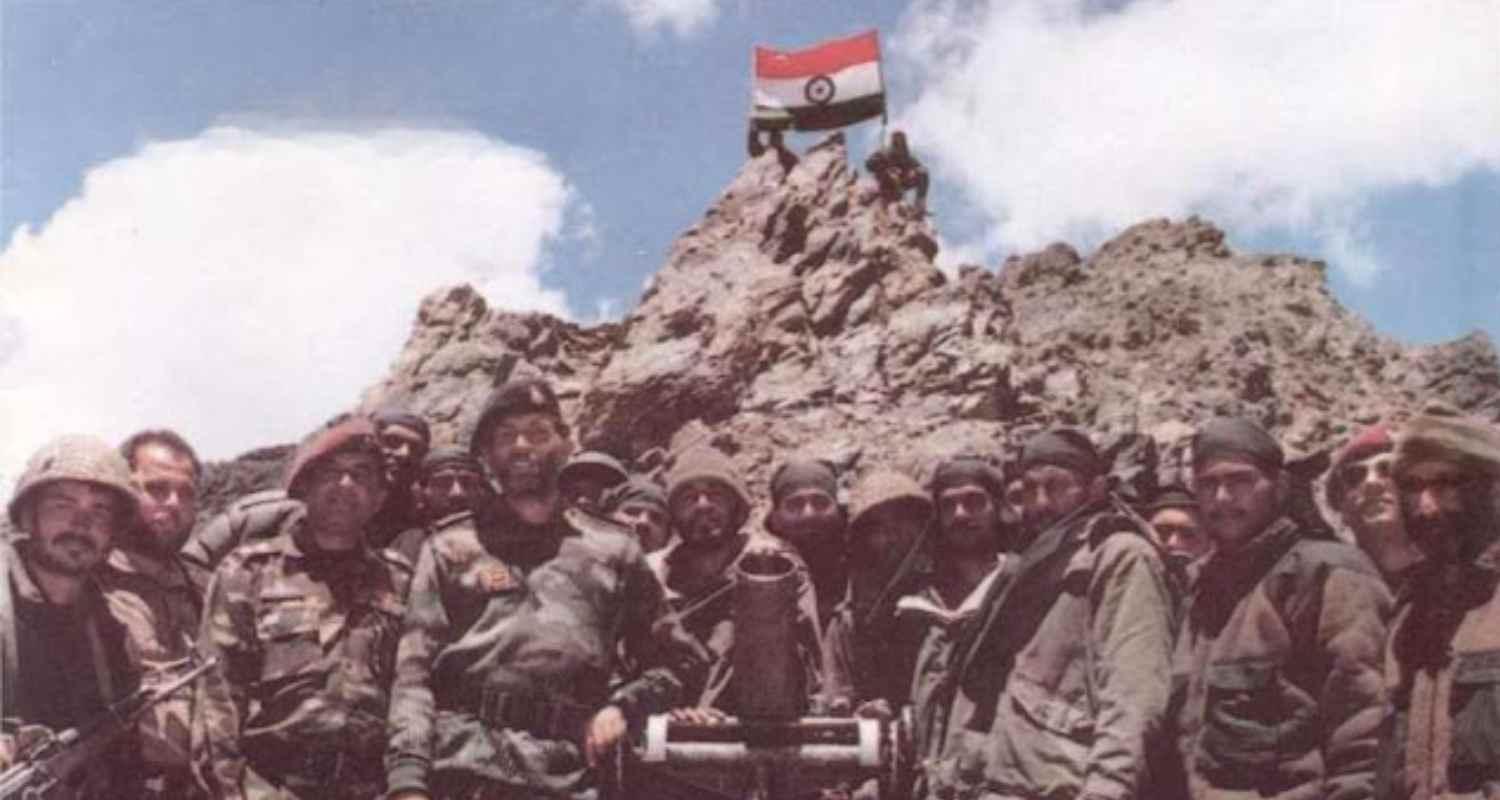
In the summer of 1999, India faced a serious military confrontation in the Himalayan region of Kargil. The conflict between India and Pakistan escalated into what is now known as the Kargil War.
The war lasted only a few months, but its geopolitical and psychological impact was immense. News of escalating tensions dominated headlines, raising fears about regional stability and economic consequences.
Financial markets reacted with caution as investors tried to understand the potential impact of the conflict.
Yet despite the intensity of the situation, India’s markets demonstrated remarkable resilience.
For modern investors, the Kargil War offers valuable insights into how markets react to geopolitical shocks, how investor psychology drives volatility, and why disciplined long-term investing remains essential. 📊💡
Understanding the Economic Context of the Kargil War 🌍📉🇮🇳
The late 1990s were a pivotal period for India’s economy.
Economic reforms initiated earlier in the decade were beginning to reshape industries, encourage investment, and strengthen financial markets.
However, geopolitical tension created uncertainty.
When the conflict began, investors feared:
⚔️ escalation into a larger war
📉 disruption to economic growth
🌍 international diplomatic pressure
💱 possible impact on trade and capital flows
The benchmark BSE Sensex experienced volatility as geopolitical news unfolded.
| Economic Factor | Market Impact |
|---|---|
| Rising geopolitical tensions ⚔️ | Increased uncertainty |
| Military operations 🇮🇳 | Short-term volatility |
| Investor caution 📉 | Temporary market weakness |
| Conflict resolution 📊 | Confidence returned |
📊 A conceptual market chart would show mild declines during peak uncertainty followed by stabilization.
💡 Key insight:
Financial markets often react emotionally to geopolitical events, but the long-term economic impact may be smaller than expected.
Lesson 1: Markets Often Overreact to Geopolitical Events ⚠️📉
Wars and geopolitical crises create uncertainty—and markets dislike uncertainty.
During the Kargil conflict:
📉 investors became cautious
📊 trading volumes increased
💰 some investors shifted to safer assets
| Market Phase | Investor Behavior |
|---|---|
| Rising tensions ⚔️ | Anxiety increases |
| Conflict escalation 📉 | Risk aversion |
| Situation stabilizes 📊 | Confidence gradually returns |
⚠️ Investor takeaway:
Short-term market reactions are often driven more by emotion and fear than by long-term economic fundamentals.
Lesson 2: Strong Economies Show Market Resilience 📈💡
One of the most important lessons from the Kargil War was how resilient India’s economy and markets proved to be.
Despite the military conflict:
✔ economic reforms continued
✔ domestic consumption remained stable
✔ investor confidence returned after the conflict ended
Markets eventually stabilized once uncertainty declined.
📊 This demonstrates a key investing principle:
Short-term geopolitical shocks rarely derail long-term economic growth.
Lesson 3: Different Sectors React Differently During Conflicts 📊⚔️
Geopolitical events rarely affect all industries equally.
Some sectors may benefit, while others face temporary challenges.
| Sector | Possible Impact |
|---|---|
| Defense sector ⚔️ | Increased government spending |
| Energy sector ⛽ | Commodity price volatility |
| Airlines ✈️ | Higher operational risks |
| Infrastructure 🏗️ | Strategic investments increase |
Understanding sector dynamics helps investors identify which industries may be more resilient during geopolitical crises.
Lesson 4: Investor Psychology Amplifies Market Volatility 🧠📊
Financial markets are strongly influenced by human emotions.
During the Kargil conflict, investors experienced:
😟 fear of escalation
📉 panic selling by short-term traders
⚠️ uncertainty about economic outcomes
Investor sentiment often follows predictable cycles.
| Market Phase | Emotional Response |
|---|---|
| Rising tensions ⚔️ | Concern |
| Conflict escalation 📉 | Fear |
| Situation stabilizes 📊 | Relief |
| Recovery begins 📈 | Optimism |
Recognizing these cycles can help investors avoid emotion-driven investment decisions.
Lesson 5: Diversification Helps Manage Geopolitical Risk 🎯📊
No investor can predict geopolitical events with certainty.
Diversification helps reduce the risk posed by unexpected shocks.
| Asset Class | Role During Crisis |
|---|---|
| Equities 📈 | Long-term growth |
| Gold 💰 | Safe-haven asset |
| Bonds 🏦 | Portfolio stability |
| Cash 💵 | Liquidity buffer |
📊 A conceptual portfolio allocation chart could show balanced diversification across asset classes.
Diversification acts as a financial shock absorber during turbulent periods.
Lesson 6: Long-Term Investors Focus on Fundamentals 📊💡
The Kargil War reminds us that markets ultimately follow economic fundamentals, not headlines.
Successful investors evaluate:
📈 earnings growth
🏢 competitive advantage
📊 return on capital
🌍 long-term economic trends
Companies with strong fundamentals tend to survive temporary crises.
Lesson 7: Market Volatility Can Create Investment Opportunities 📉📈
Periods of uncertainty often create temporary mispricing in financial markets.
When fear dominates markets:
📉 valuations may fall
📊 strong companies may trade at discounts
💡 disciplined investors may find opportunities
However, careful research and risk management remain essential.
Lesson 8: India’s Market Maturity Was Demonstrated 🇮🇳📊
Another interesting takeaway from the Kargil War is that India’s financial markets demonstrated growing maturity.
Despite intense geopolitical stress:
✔ financial systems remained stable
✔ investor confidence eventually returned
✔ markets recovered once uncertainty declined
This reflects the strengthening foundations of India’s economic framework.
Common Misconception ⚠️
“Wars permanently damage financial markets.”
History shows that markets often recover after geopolitical crises.
While conflicts can trigger short-term volatility, economies and businesses usually adapt.
Investors who panic during crises may miss the recovery that often follows.
Direct Stock Investing: Opportunity Requires Discipline 📊⚠️
Geopolitical crises highlight the importance of disciplined investing.
Direct stock investing requires:
📚 research and due diligence
📊 financial statement analysis
⏳ long-term monitoring
⚠️ risk management
🧠 emotional discipline
Investors who lack time or expertise may consider diversified investment vehicles such as mutual funds.
A Resilient Investor Framework for Geopolitical Risks 🎯📊
Investors can navigate geopolitical uncertainty by following disciplined principles.
| Principle | Investor Application |
|---|---|
| Diversification 🎯 | Spread investments across asset classes |
| Risk Awareness ⚠️ | Monitor geopolitical developments |
| Long-Term Thinking 📈 | Avoid panic selling |
| Balanced Allocation 📊 | Combine growth and defensive assets |
📊 A conceptual portfolio diversification chart could illustrate balanced exposure across equities, bonds, gold, and commodities.
Key Takeaways 💡📊
✔️ Geopolitical conflicts can trigger short-term market volatility.
✔️ Markets often overreact to geopolitical uncertainty.
✔️ Strong economies can remain resilient during crises.
✔️ Diversification helps investors manage geopolitical risk.
✔️ Investor psychology amplifies market movements.
✔️ Long-term disciplined investors often benefit from market recoveries.
👉 Explore more research-driven insights on **Smart Investing India — Invest smartly, India! 🇮🇳📈
Discover more from Smart Investing India
Subscribe to get the latest posts sent to your email.